
About Course
Course Overview
This Basic Life Support (BLS) course is designed to equip participants with the knowledge,
skills, and confidence needed to act safely and effectively in a cardiac arrest or lifethreatening emergency. It integrates key concepts such as the Chain of Survival, high-quality
CPR, AED use, and age-appropriate resuscitation techniques for adults, children, and infants.
The principles are based on contemporary resuscitation science and recognised international
guidelines.
Learning Outcomes
By the end of this course, learners will be able to:
1. Describe and apply the Chain of Survival in cardiac arrest situations.
2. Recognise the signs of cardiac arrest and act promptly to activate emergency response
systems (e.g., call 999/112).
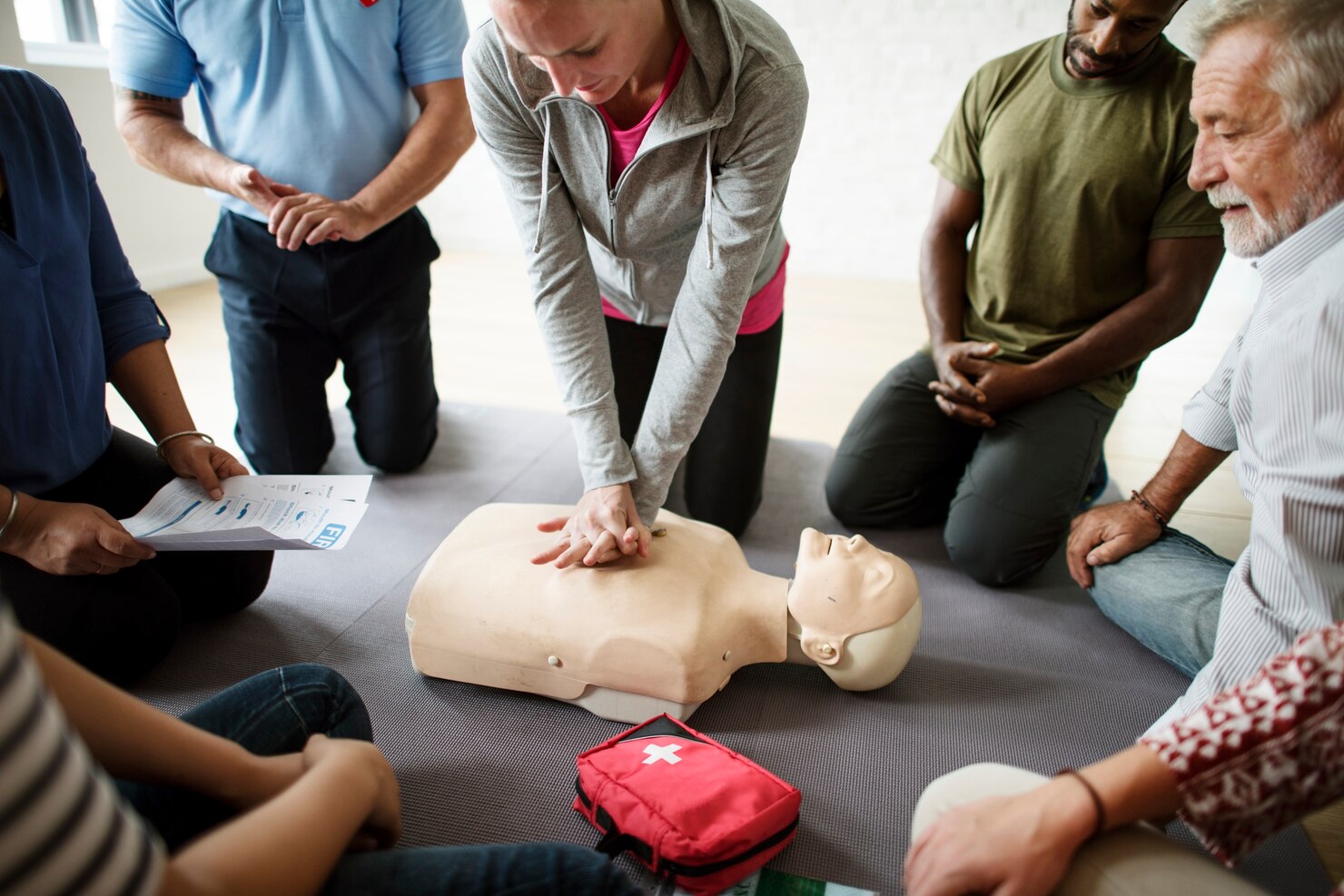
3. Demonstrate high-quality CPR, including correct compression rate and depth, for adults,
children, and infants.
4. Use an AED safely and effectively, including placement for different age groups.
5. Provide ventilation support using barrier devices where appropriate.
6. Coordinate resuscitation with others in a team setting.
7. Apply infant-specific BLS techniques, including one- and two-rescuer approaches.
8. Explain differences in approach across age groups and how to adapt BLS accordingly.
Course Content
Course Modules
-
Introduction to Basic Life Support
-
The Chain of Survival
-
Recognising Cardiac Arrest and Activating Emergency Response
-
High-Quality CPR
-
Automated External Defibrillator (AED) Use
-
BLS for Children and Infants
-
Team-Based Resuscitation
-
Two-Rescuer Basic Life Support (BLS/CPR) for Adults
-
Reference Links